Drying Hardwood vs Tile Floors After Water Damage in Concrete Slab Homes
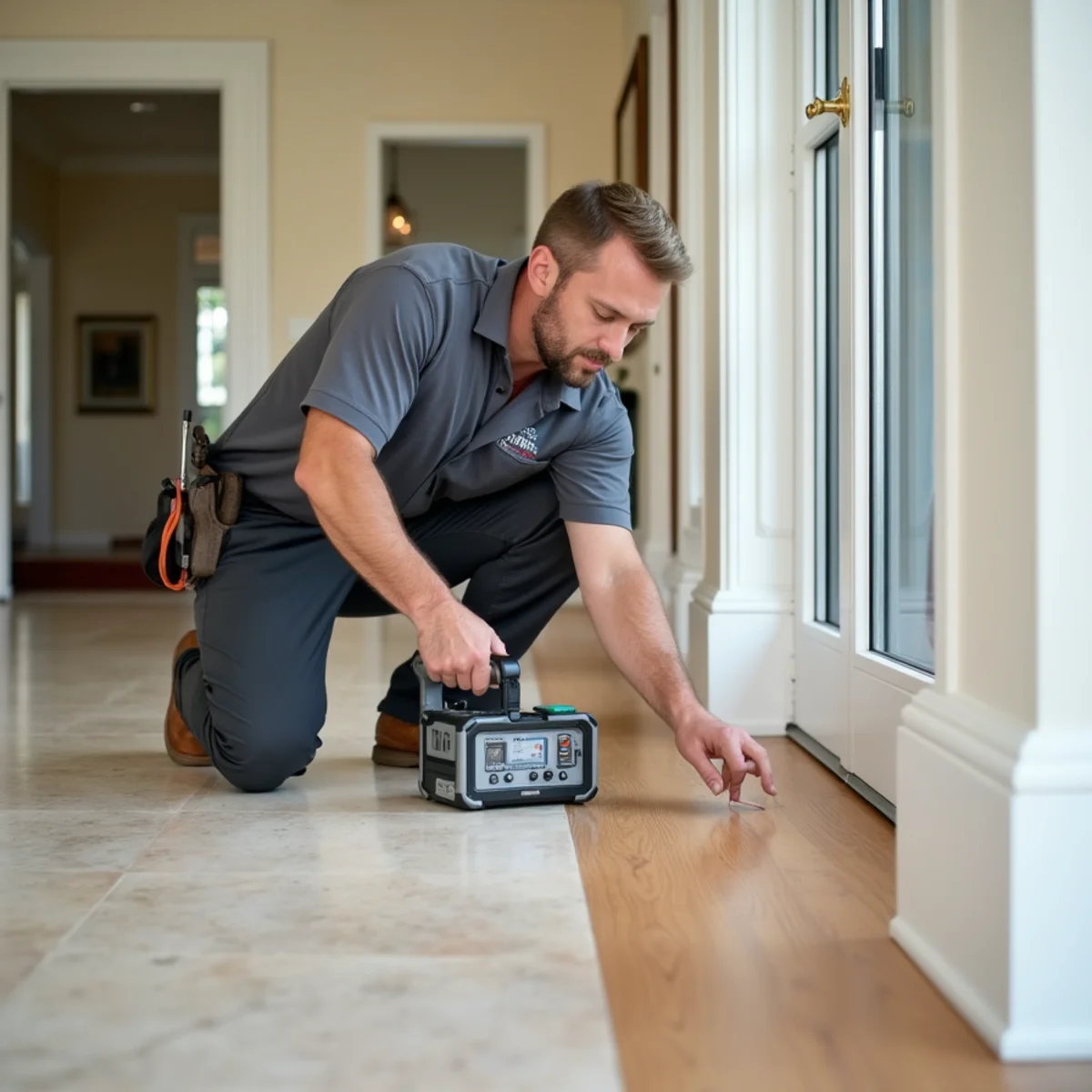
Drying Hardwood vs. Tile on Concrete Slabs: Direct Engineering Answer
Drying flooded floors over concrete slab foundations in Naples requires two distinct thermodynamic approaches: engineered hardwood requires specialized negative-pressure vacuum floor mat systems to draw trapped moisture through plank seams before wood fibers deform, whereas ceramic and porcelain tile requires deep vapor-pressure desiccant dehumidification to extract water from porous grout and thinset mortar before chemical debonding occurs.
Because Southwest Florida homes are built on monolithic concrete slabs without basements, water cannot drain downward. Water gets trapped between impermeable floor coverings and dense concrete, traveling laterally across living areas and feeding black mold colonies beneath baseboards.
The Physics of Slab Moisture Traps in Southwest Florida Homes
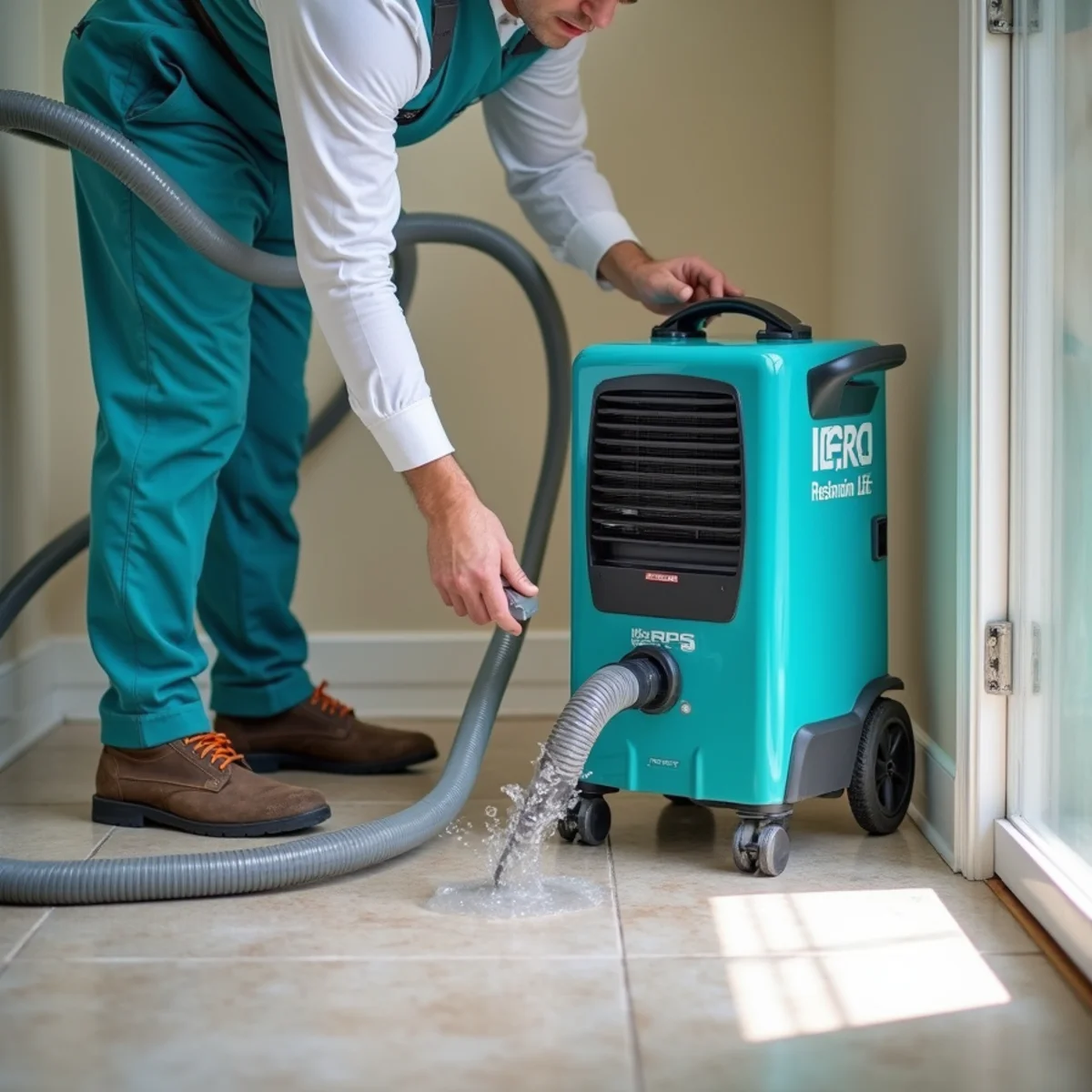
In Collier and Lee counties, concrete slab foundations sit at or near the regional water table. When a plumbing leak or hurricane inundation occurs, concrete absorbs liquid through capillary pores like a dense sponge.
When luxury finishes—such as porcelain tile, glued engineered hardwood, or luxury vinyl plank (LVP)—are installed over the slab, they act as an impermeable vapor retarder. Trapped water has no natural escape route. If surface drying is attempted with standard fans alone, the surface may feel dry while the concrete slab beneath remains saturated at 95% to 100% relative humidity.
Need Immediate Emergency Extraction in Naples?
Standing water damages drywall and fosters mold in 24 to 48 hours. Speak to a live restoration coordinator right now.
Crews on standby across Naples, Marco Island & Bonita Springs
Flooring Substrate Restoration & Salvage Feasibility Matrix
Whether flooring can be preserved depends on the material composition, water category, and hours of exposure:
| Flooring Material | Moisture Reaction & Failure Mode | Salvage Feasibility | Mandatory Restoration Equipment |
|---|---|---|---|
| Solid / Engineered Hardwood | Cupping (raised edges) & crowning (swollen center) | 80% salvageable if treated within 24–48 hours | Injectidry negative-pressure vacuum extraction mats |
| Glued Porcelain / Ceramic Tile | Thinset debonding, efflorescence & hollow tiles | 95% salvageable if dried before adhesive breakdown | High-capacity desiccant dehumidification chambers |
| Luxury Vinyl Plank (LVP) | Traps water in underlayment pad; mold underneath | Planks salvageable; must be unclicked and dried | Mechanical uplift, slab sanitization & reinstallation |
| Laminate Flooring | Core swelling, edge buckling & delamination | Non-salvageable; compressed MDF disintegrates | Demolition, bag disposal & subfloor slab grinding |
| Natural Travertine / Marble Stone | Spalling, mineral discoloration & efflorescence salt | Salvageable with deep vapor extraction & poultice | Low-grain refrigerant drying & stone re-sealing |
Rescuing Cupped Hardwood with Negative-Pressure Injectidry Mat Systems
When water penetrates engineered hardwood planks common in Naples luxury communities like Pelican Bay and Grey Oaks, the bottom surface absorbs moisture faster than the top polyurethane finish, causing planks to 'cup' (curl upward at the edges).
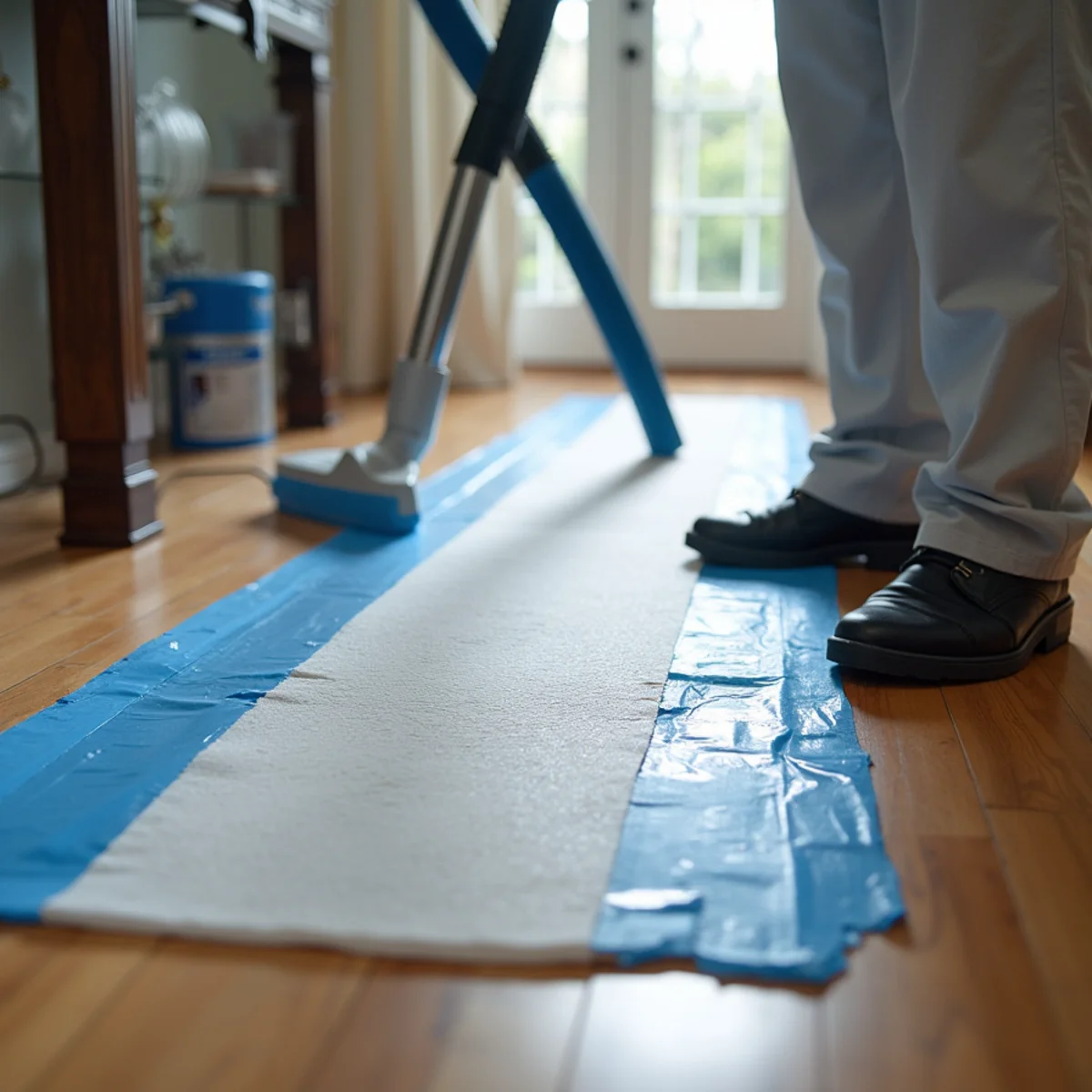
Many contractors prematurely rip up cupped hardwood. Ultra Mold & Water Pros deploys specialized Injectidry floor mat systems. Clear vacuum mats are taped across the floor, and industrial vacuum extractors generate high negative pressure that pulls trapped water vapor out through microscopic seams between planks.
Within 3 to 6 days of continuous mat extraction, moisture levels equalize and hardwood planks relax back to their original flat profile, saving homeowners tens of thousands of dollars in replacement costs.
However, if the hardwood is multi-ply engineered planking that remained submerged in standing water past 72 hours, delamination between veneer layers can occur. In these circumstances, our technicians document ply-separation to support a full floor replacement claim under Florida's uniform matching statute.
Luxury Vinyl Plank (LVP) Water Traps: Why Floating Floors Must Be Unclicked
Luxury Vinyl Plank is 100% waterproof on its surface, leading many homeowners to mistakenly believe their floor is undamaged after a leak. However, water easily seeps through perimeter expansion gaps and locking joints.
Once water slips beneath LVP, it becomes sealed against the concrete slab by the vinyl backing and attached rubber acoustic pad. Because vinyl is non-breathable, this trapped moisture cannot evaporate. Within 48 hours, stagnant water breeds Stachybotrys mold colonies that feed on drywall dust and concrete salts.
Our technicians carefully unclick and label LVP planks, sanitize the concrete slab with EPA biocides, dry the subfloor to baseline standards, and reinstall the original planks without material loss.
Recommended Restoration Services & Coverage Zones
Related solutions referenced in this guide:
Questions Answered in this Guide
Quick reference summary for homeowners and property managers.
Yes. If commercial negative-pressure vacuum mat extraction begins within 24 to 48 hours before wood cells take a permanent compression set, cupped hardwood planks can return to their original flat profile.
Have a question specific to your property? Call our 24/7 restoration helpline: (831) 303-1192
Questions about your restoration project?
Send us a message or call our 24/7 emergency dispatch line directly. For the fastest help, call (831) 303-1192.